Friday, April 25, 2014

Luck number 13

Annenberg Video Circumference and Diameter  


Describe Ms. Scrivner's techniques for letting students explore the relationship between circumference and diameter.  What other techniques could you use?

Ms. Scrivner had the students relate the definitions of circumference and diameter to had gestures.  By giving her students something physical to do, they are able to make better connections.  She also helped clarify the definition of the word circumference by showing students other words that started the same way and had similar meanings such as circle and circus.  Then through inquiry, the students went around the room and measured different circles.  I love how the octagon team got down on the rug and drew out a circle in chalk using a hand made compass.

In my classroom I would add songs and movements to enhance learning and memorization. 


In essence, students in this lesson were learning about the ratio of the circumference to the diameter.  Compare how students in this class are learning with how you learned when you were in school.

 As Ms. Scrivner mentioned, I was handed a worksheet and all the information was given to me.  We were given the circles, all the measurements, and the formula and were told to answer the question.


How did Ms. Scrivner have students develop ownership in the mathematical task in this lesson?
Students developed ownership by taking their own measurements and problem solving together in their groups.  

How can student's understanding be assessed with this task?


Assessment was present during this lesson.  The teacher used observation and questioning.  When students went off track, she brought it to their attention by asking questions that would make them think about their answer.  Such as the case of the group that measured the trashcan.  The teacher pointed out a measurement that the group did correctly and asked them to compare they way they measured that object to the trashcan.  The students knew immediately what they did wrong and fixed it. 


Annenberg Circles and Pi Module 

Most of the questions from problems B 1-4 I had issues with.  It wasn’t that I got the wrong answer it’s just my way about getting the answer was different than the formula given.  This makes me very nervous. 

 Em, Even though I came up with the right answers how important is it for me to know the exact formulas they gave?

Problem B10
If a circle has a radius of 5 cm and the margin of error in measurement is 0.2 cm, what is a reasonable approximation for the area of the circle?

Em, I have no clue what I did wrong and when I read the solution it was like reading a foreign language. Did you understand this?

Textbook Pages 1-26

2. A general instructional plan for measurement has three steps.  Explain how the type of activity used at each step accomplishes the instructional goal.

Step One – Making Comparisons

Students must understand what they are going to measure when comparing objects. They must chose similar attributes in order to make a fair comparison, such longer/shorter and heavier/lighter. They cannot compare the volume of one object and compare it to the length of another, as one has nothing to do with the other.

Step Two – Using Models of Measuring Instruments

Inquiry and investigation are important tools for students to use to build their understanding of any topic.  Using physical models to measure attributes, both non-standard and standard, of a particular object or when comparing two objects will facilitate the measuring concept. Our books shows us the example of using many index cards to cover a desk to measure the area verses using one index card.  With the one card you would have to move and keep track of those movements, the margin for era is high.

Step Three – Using Measuring Instruments

It is important that students know not only how to measure correctly but also how to read these measurements and how the measuring device they are using works.  Having students make their own measuring devices is a great way to achieve this.  Once they master using the device they made they can compare it with standard measuring tools such as rulers.  

3. Four reasons were offered for using nonstandard units instead of standards units in instructional activities.  Which one of these is seem most important and why?

Nonstandard units make it easier to focus directly on the attribute being measured.

When we use nonstandard items to measure with we are developing a deeper understanding of what measurement means. We take to focus away from lines and numbers and refocus on different attributes of the item being measured.  It also allows for a good transition into standard units.

For further consideration….

We have explored numerous areas throughout this semester.  Pick five ideas that you will later use in your classroom. 

Technology- I have saved all the websites given and the ones I have found throughout the semester.  

Data collection- I definitely will have my students collect and interpret their own data.  

Manipulatives- These are vital learning tools.  In my last classroom, the teacher never used these. 

Vocabulary – Let me stress that I believe that learning a concept trumps learning the correct vocab of said concept.  However, it is important to know the vocab as well. Sometimes understanding the concept will help in learning the vocab.

Inquiry- I want my students to put their hands on everything. Explore, investigate and collaborate with their peers.


Saturday, April 19, 2014

Measurement

TCM Article – Rulers 

I like the idea about using the three rulers that were distinguished by their color and their nonstandard units of measure.  Using these types of nonstandard measurement tool will help students when it comes to using standard rulers.  The different size units will help students understand different units of measure such as centimeters and millimeters.
The children in the article still need to be taught how to use the measurement tools correctly.  Some students were counting the first line as part of the measurement and others were not lining up tools correctly when it came to measuring items longer that the ruler.

Em, do you feel that the familiarity of the ruler will get in the way of teaching children to measure using rulers with no numbers on them?


Angles Video

The children in the angle video had a strong understanding of what an angle is.  I thought that they explained themselves very well. I did not like how monotone the teacher was.  I know she does not want to say one child is correct so that she can measure everyone’s understanding however, no excitement in her voice could led the children to question if they are on the wrong path.
Em, what did you think about the teachers delivery of her lesson? 
I think this is a very important part of teaching. What do you think?


Case Studies 

The case studies backed up the stamen that students try to attach new ideas to previous knowledge.  It is important when introducing new content to make it as relevant as possible to our students so that they will have a more in depth understanding of that content.


Annenberg Angles Module 

So I am not afraid to say that this is one of the areas in math where I struggle. When I read the question, I get overwhelmed and my mind just shuts down.  Then when I open the solution, I can clearly see the answer and wonder why I did not know it.

Problem B12
a. Use this technique of drawing diagonals from a vertex to find the sum of the measures of the vertex angles in a regular pentagon (see below). What is the measure of each vertex angle in a regular pentagon?
b. How many triangles are formed by drawing diagonals from one vertex in a hexagon?
c. What is the sum of the measures of the vertex angles in a hexagon?
d. Find a rule that can be used to find the sum of the vertex angles in any polygon.
e. Can you use your rule to find the measure of a specific angle in any polygon? Why or why not?


I was able to answer a-c but when it came to writing a rule or algebraic equation, I stumble.  I totally understood when I read the solution. 
Em, how did you do this week on the Annenberg site?

TCM Article – How Wedge you Teach? 

The article takes the same approach to teaching as the other article we read this week.  This teacher took a circle, which is the bases of angle measurement and asked her students not to try to apply previous knowledge to the exercise.  It was a struggle for the students not to relate the measurement activities back to what they know about measuring angles. This teacher was looking for a deeper understanding and if students could not let go of preconceived notions they would no reach the level that she was striving for.

I will definitely be looking for ways to use inquiry-based lessons for all subject I teach.  Again a wonderful hands-on way to teach!


Exploring Angles with Pattern Blocks


Green Triangle
Label each angle of the triangle with its measurement: each angle is 60°
How did you determine these measurements?  I remembered that the interior angles of a triangle add up to 180°.  This triangle’s angles are congruent so I divided 180° by 3.


Blue Rhombus
Label each angle of the rhombus with its measurement. Each angle is 60 
How did you determine these measurements?  I found this measurement by fitting two green triangles inside the rhombus.


Red Trapezoid
Label each angle of the trapezoid with its measurement. The 2 top angles are 60° and the 2 lower angles are 120° 
How did you determine these measurements?
This time I could fit a blue rhombus and a green triangle inside.  I just added up all the angles.


Tan Rhombus
Label each angle of the rhombus with its measurement.  The smaller angles are 30°  and the wider angles are 150°
How did you determine these measurements?  I made a right angle with the red trapezoid and the tan rhombus.  Subtracted the angles and then assigned the congruent angle the same.  I know the triangles have interior angles that add up to 180° so I just subtracted 180 from 30 to get the other two angles.


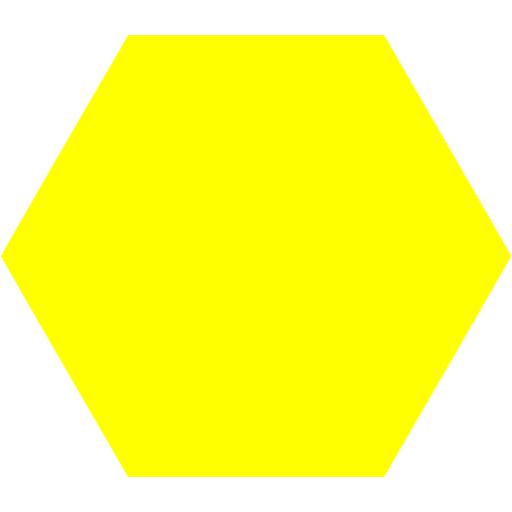
Yellow Hexagon   
Label each angle of the Hexagon with its measurement. Each angle is 120°
How did you determine these measurements?
I divided the hexagon into 6 triangles and added the two angles together where the triangles met.
Em, This activity was easier for me to do than the Annenburg activities. I feel it is because I could physically do the activities.  What do you think? 


Challenge

If possible, put 2 different (non-congruent) pattern blocks together to make the angles listed below.  For each design you find, trace around the pattern blocks to make a labeled sketch of your solution.  Attempt to find at least two designs for each set of angles.


1. Right Angle (90˚)


2. An obtuse angle (greater than 90˚ and less than 180˚)


3. A straight angle (180˚)


4. A reflex angle (greater than 180˚)


5. Mai says it’s impossible to put 2 different pattern blocks together to make an acute angle (and angle less than 90˚).  Do you agree or disagree with her?  Explain your answer.  

Yes, the only way you could achieve an acute angle is by placing two tan rhombuses together which are like blocks. All other block have angles that are two large.  


For further discussion 


My husband is the cook in our house.  He never measures anything using standard measure.  It’s an handful if this, or two small coffee ups of that.  A couple of shakes of pinched of something.  Everything he makes comes out great.  This drives me nuts. I can cook about 5 meals by heart, without measure and they come out decent.  Everything else I have to follow a recipe to the T or it’s a disaster. 

Em, I know you are a good cook! Do you measure using standard measuring tools? 


Saturday, April 12, 2014

“Geometry [and all areas of mathematics for that matter] is more than definitions; it is about describing relationships and reasoning” (NCTM 2000, p. 41)

Tangram Discoveries (Solution) 

Even though I did not get any of the jargon right, I did get both of these problems correct. ♥‿♥

Coordinate Grids 

What websites did you explore and which ones would you use in your own classroom?  What are the advantages and disadvantages of using online programs in the classroom? 

I looked at all the links.  Bellow I listed a few of my favorites.  I believe the advantages of using online programs out way the disadvantages.  Students who need extra help can play he games and go through different activities to gain an understanding of the topic.  Students who have mastered the topic can do extended activities that the teacher assigns to further their knowledge.

A disadvantage that sticks out to me would be a student who is struggling, skipping over questions or parts of the lesson and the teacher not being aware. This would be counter-productive and no one benefits.

Em, do you feel students are likely to skip over the problems they are having trouble with instead of asking for help?

Billy Bug 2 - Move the bug to help him feed. Uses all four quadrants, four 5x5 grids.

Graphing Ordered Pairs- Lesson with interactive practice on graphing and locating ordered pairs on a grid.

Ordered Simple Plot - Input a series of (x,y) ordered pairs and plot them in the order the pairs are inputted, either connected or as unconnected data points.

Whats the Point? - Play a coordinate plane game from Funbrain.com. (use the hardest level)

Stock the Shelves - You have two minutes to put the soda bottles in their correct places on the coordinate plane.

Em, I have high hopes of using technology immensely in my classroom. How do you feel about that?

Miras and Reflections 


Have you ever used a Mira before? Did you find any part of this problematic? How did this build on your understanding of transformations? 


I have never used a Mira before and it was easy to use once I figured out the lighting and the shadow my hand casts.  It opened my eyes to symmetry.  Objects that I could see 2 or four lines turned out had 6 or 8. 


Letters with No Lines of Symmetry:     E, F, G, J, K, L, N, P, Q, R, S, Z
Letters with One Line of Symmetry:     A, B, C, D, H, M, T
Letters with Two Lines of Symmetry:     I, U, V, W, Y
Letters with More than Two Lines of Symmetry:      O


If we were to change the font or style it would change the line of symmetries because of the differences in the print of the font. Ie: A is different from A

Challenge: Find a word that has line symmetry 

BOX   OX  DOC

Em, were you able to find a word?

Kaleidoscopes Article


On page 81 in this article the author states, “Throughout the study of mathematics, students need to develop and apply geometric reasoning, visualization, and spatial reasoning skills.”  This is best done in my opinion through hands on discovery and investigations.  The activities along with the making of the kaleidoscopes help the students connect concepts with physical objects.  Below I listed the websites mentioned in the article.  I played around with them and saved them to show Alexander. 

Kaleidoscopes


Em, this was a very hands on moduel. I feel I do better the more hands on an activity is. How about you?

Annenberg Measurement Module

Like in other modules, the lack of the proper tools made this one harder to participate in. I relied on my past experiences in chemistry to help me envision doing the exercises. I have learned that measurement is only as precise as the tool being used to measure and the ability of the user to use that tool effectively.

Problem B1: How could you use the tinfoil to find the surface area of the rock?  Why would you use this technique?  

I have never hear of measuring this way before but it made perfect sense as soon as I read it. I went out side to look for a large rock so I could do this activity. 

I wrapped to rock in foil. ( there is no way this method will be exact)
 Unwrapped the foil and transferred to the graph paper.

Outside perimeter   75 cm²
Inside perimeter      56 cm²
Average perimeter   65.1 cm²


Then I switch to a smaller graph paper. 0.5 cm

Outside perimeter   70.25 cm²
Inside perimeter       59 cm²
Average perimeter   64.625 cm²

The smaller the measurement the more precise the measurement.


Case Studies

Summarize your reflection questions and make connections to the other activities and measurement PowerPoint.  

Students come to school with a cloudy version of non-standard types of measurement.  They have a hard time with the realization that a larger measured number means a smaller unit or item was used to measure it. They still believe big = big.  Slowly through teaching and practice, students start to make these connections. In the upper primary grades, students learn how to use different measuring devices properly. They realize that in order to get a proper measurement they must use the tool correctly and be consistent in their technique.  

For further discussion

A fellow teacher says that he cannot start to teach any geometry until the students know all the terms and definitions and that his fifth graders just cannot learn them. What misconceptions about teaching geometry does this teacher hold?  

For me I learn better, when I have something visual to attach words a definitions with.  I can honestly say that I had little problems with this module but I would still struggle with terms and technical definitions.  I realize that math terminology is important but I am more worried about the concept and skills to achieve comprehension of the subject matter.

Em, will you focus on skills and comprehension first or vocabulary and mathematical jargon?


Now that you’ve had some time to explore the world of geometry, how has your view of the key ideas of geometry that you want your students to work though changed?

I can say that it is a little less scary.  It was reassuring for me to hear that Dr. Higgins still struggles with different concepts. I am looking forward to teaching geometry in my classroom because of the hands on possibilities it have to offer.

Sunday, April 6, 2014

~~~~Symmetry~~~~


Annenberg Symmetry Module

As humans, we are attracted to symmetry.  If some one has a symmetrical face, they are considered more attractive.

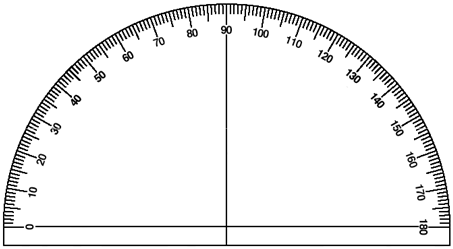
This series was easy for me in the beginning.  As we moved on to rotation symmetry Session 7, B, I realized how important it is to have the right tools required to solve the math problem you are working on.  Our math kits should have come with a protractor and compass. I eventually worked out the problem in my head but to be able to work out the proper angels using the proper tools would have been beneficial and a real time saver.


What do you think Em?  Did you have the right tools?

Pentomino Activities

This was a fun and easy activity.  It brought back memories of my son bringing home a picture similar to the one I made seen below.
Tessellations


Spatial Sense

Use the pentomino pieces to make different size rectangles (Amount of pieces used varies from puzzle to puzzle.)

3 x 10 rectangle
5 x 5 rectangle


5 x 8 rectangle


I was unable to figure out the last two rectangles. Em how many did you find? Was this hard for you?


•4 x 10 rectangle

•6 x 10 rectangle (there are 1339 different ways to do this and it requires using all the pieces)

Pentomino Narrow Passage

My Pentomino Narrow Passage is a whopping 33 in length. This took me a while to figure out. I kept coming up 22 in length. I hope I did it right. Did you have a hard time as well? Do you think this would be an activity you would use in your classroom?


Tessellating T-shirts Article

How has this article furthered your understanding of transformational geometry
 I learned that when you tessellate a shape the area does not change but it is clear to see that the perimeter does.  The article also talks about how some pre-service teachers thought that transformational geometry is taught in high school, my son learned this, this year, in third grade.  

What does it mean to tessellate?  To tessellate in two dimensions is the branch of mathematics that studies how shapes, known as tiles, can be arranged to fill a plane without any gaps, according to a given set of rules. 

Look online for different examples of tessellations and share what you’ve found. 

http://illuminations.nctm.org/Activity.aspx?id=3533

Tangram Discoveries

Take the two small triangles and the one medium triangle.  Using just threes three pieces (but all three), make five different (that is, non-congruent) polygons: 

Triangle


Square 
Rectangle
Parallelogram
Trapezoid


Which polygon has the greatest perimeter?…the least perimeter?  How do you know? 

This was hard to see so I started by listing the shapes by how many sides were showing. I assigned estimated lengths to the sides of the triangles.
Then I added up the sides.  

Which polygon has the greatest area?  

All the polygons have the same area.  We have not changed the size of the shapes we are using; we are just flipping them around.

I love that this moduel was so hands on! Was it easier for you to figure things out as well givin could work with shapes to figure thigs out? 

Ordering Rectangles Activity

Take the seven rectangles and lay them out in front of you.  Look at their perimeters. Do not do any measuring; just look.  What are your first hunches?  Which rectangle do you think has the smallest perimeter?  The largest perimeter?  Move the rectangles around until you have ordered them from the one with the smallest perimeter to the one with the largest perimeter.  Record your order.

D, E, C, A, B, G, F

Now look at the rectangles and consider their areas.  What are your first hunches? Which rectangle has the smallest area?  The largest area?  Again, without doing any measuring, order the rectangles from the one with the smallest area to the one with the largest area.  Record your order.

C, D, B, E, F, A, G

Now, by comparing directly or using any available materials (color tiles are always useful), order the rectangles by perimeter.  How did your estimated order compare with the actual order?  What strategy did you use to compare perimeters? 

 I used the color tiles to compare the perimeters and then just did the math.
D, E, C, A, B, G, F (first numbers)
E, D, C, B, G, A, F   I did not do as bad as I thought

By comparing directly or using any available materials (again…color tiles), order the rectangles by area. How did your estimated order compare with the actual order? What strategy did you use to compare areas?

C, D, B, E, F, A, G (first numbers)
C, D, E, B, F, A, G  WOW I only mixed up two of the numbers

What ideas about perimeter, about area, or about measuring did these activities help you to see?  What questions arose as you did this work?  What have you figured out?  What are you still wondering about?   

 I was worried that with out a ruler I would be unable to figure out the perimeter or area.  I learned to be resourceful and that I could use anything as my tool to measure as long as I stayed consistent. 

For Further Discussion

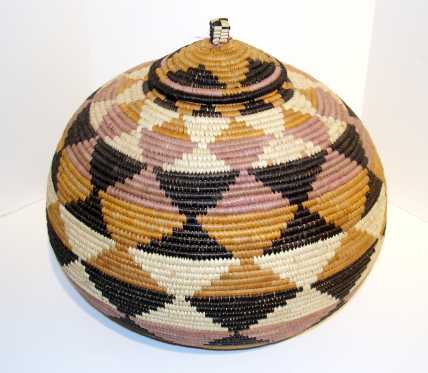
Multicultural mathematics offer rich opportunities for studying geometry.  Research the art forms of Native Americans and various ethnic groups such as Mexican or African Americans.  What kinds of symmetry or geometric designs are used in their rugs, baskets, pottery, or jewelry?
Discuss ways you might use your discoveries to create multicultural learning experiences.

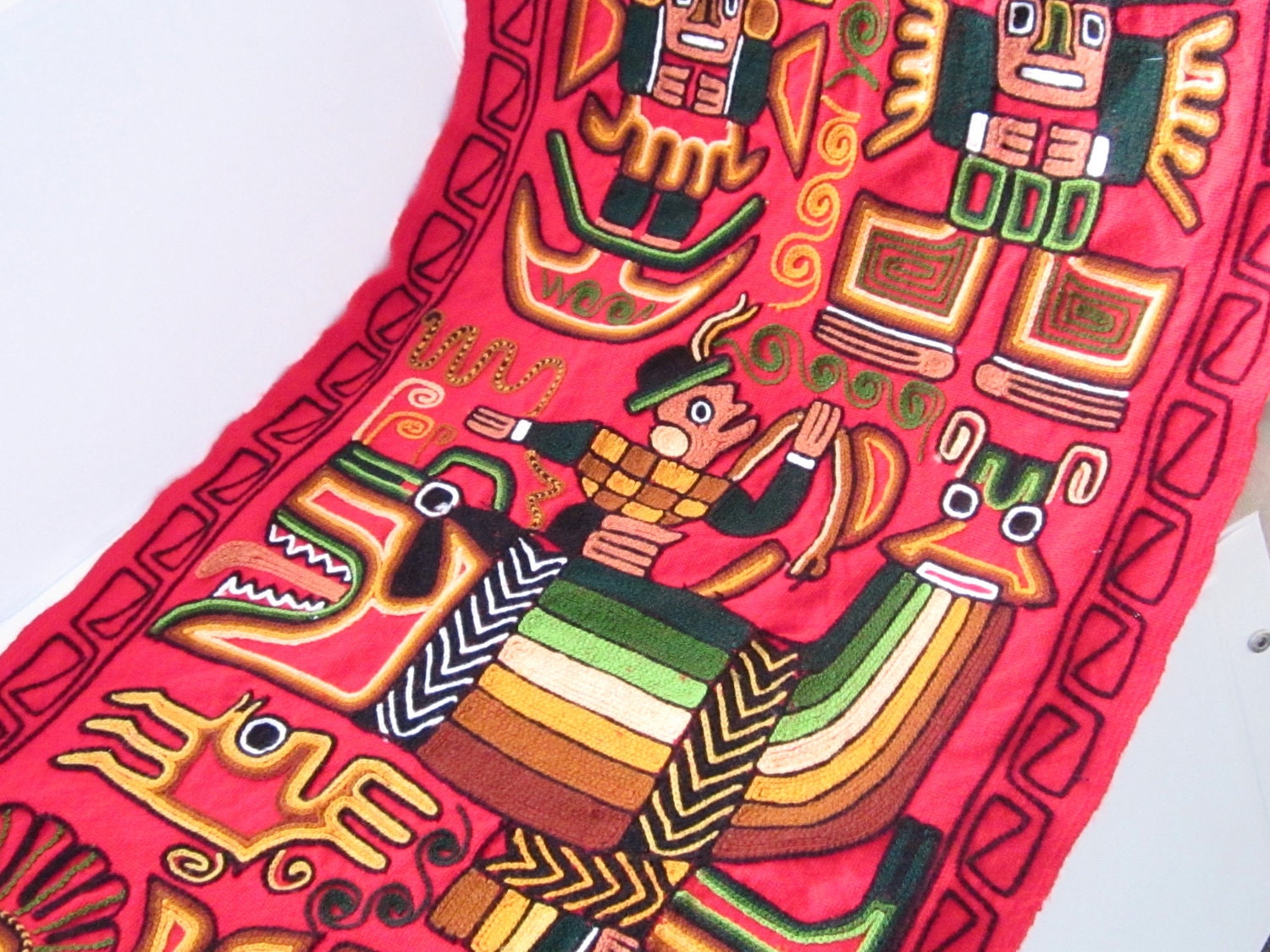
I looked up all three groups and what wonderful pictures I saw.  I loved the bright color and use of shapes. Many artistes used symmetry in their work. I looked at both folk art and new art.  I could see the influence of the old in the new.  This tells me how influential art is in there culture, how they see and determine what is art. This tie may be able to help me one day bridge a math barer.  I could introduce any of these pictures while talking about geometry.  

Em, I am interested how you see geometry. Dis you learn geometry in your home land or in the States?


Native American

African American

Native American


African American

Mexican American
Mexican American