TCM Article – Rulers
 I like the idea about using the three rulers that were distinguished by their color and their nonstandard units of measure. Using these types of nonstandard measurement tool will help students when it comes to using standard rulers. The different size units will help students understand different units of measure such as centimeters and millimeters.
The children in the article still need to be taught how to use the measurement tools correctly. Some students were counting the first line as part of the measurement and others were not lining up tools correctly when it came to measuring items longer that the ruler.
Em, do you feel that the familiarity of the ruler will get in the way of teaching children to measure using rulers with no numbers on them?
Angles Video
Em, what did you think about the teachers delivery of her lesson?
I think this is a very important part of teaching. What do you think?
Case Studies
The case studies backed up the stamen that students try to attach new ideas to previous knowledge. It is important when introducing new content to make it as relevant as possible to our students so that they will have a more in depth understanding of that content.Annenberg Angles Module
So I am not afraid to say that this is one of the areas in math where I struggle. When I read the question, I get overwhelmed and my mind just shuts down. Then when I open the solution, I can clearly see the answer and wonder why I did not know it.Problem B12
e. Can you use your rule to find the measure of a specific angle in any polygon? Why or why not?
I was able to answer a-c but when it came to writing a rule
or algebraic equation, I stumble. I
totally understood when I read the solution.
Em, how did you do this week on the Annenberg site?TCM Article – How Wedge you Teach?
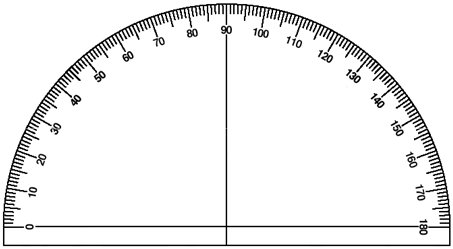 The article takes the same approach to teaching as the other article we read this week. This teacher took a circle, which is the bases of angle measurement and asked her students not to try to apply previous knowledge to the exercise. It was a struggle for the students not to relate the measurement activities back to what they know about measuring angles. This teacher was looking for a deeper understanding and if students could not let go of preconceived notions they would no reach the level that she was striving for.
I will definitely be looking for ways to use inquiry-based lessons for all subject I teach. Again a wonderful hands-on way to teach!
Exploring Angles with Pattern Blocks

Green Triangle
Label each angle of the triangle with its measurement: each
angle is 60°
How did you determine these measurements? I remembered that the interior angles
of a triangle add up to 180°. This
triangle’s angles are congruent so I divided 180°
by 3.
Blue Rhombus
Label each angle of the rhombus with its measurement. Each angle is 60
How did you determine these measurements? I
found this measurement by fitting two green triangles inside the rhombus.
|

Red Trapezoid
Label each angle of the trapezoid with its measurement. The 2 top angles are 60
How did you determine these measurements?
How did you determine these measurements?
This time I could fit a blue rhombus and a green triangle inside. I just added up all the angles.
Label each angle of
the rhombus with its measurement. The smaller angles are 30° and the wider angles are 150°
How did you
determine these measurements? I made a right angle with
the red trapezoid and the tan rhombus. Subtracted
the angles and then assigned the congruent angle the same. I know the triangles have interior angles
that add up to 180° so I just subtracted 180 from 30 to get the other two
angles.
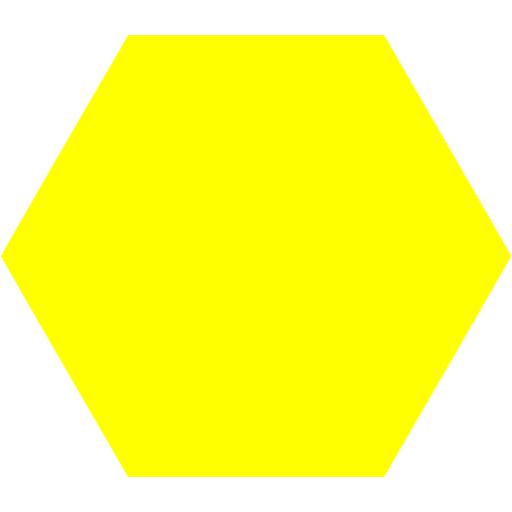
 Label each angle of the Hexagon with its
measurement. Each
angle is 120°
Label each angle of the Hexagon with its
measurement. Each
angle is 120°
How did you determine these measurements?
I
divided the hexagon into 6 triangles and added the two angles together where
the triangles met.
Em, This activity was easier for me to do than the Annenburg activities. I feel it is because I could physically do the activities. What do you think?
Em, This activity was easier for me to do than the Annenburg activities. I feel it is because I could physically do the activities. What do you think?
Challenge
If possible, put 2
different (non-congruent) pattern blocks together to make the angles listed below.
For each design you find, trace around
the pattern blocks to make a labeled sketch of your solution. Attempt to find at least two designs for each
set of angles.

1. Right Angle (90˚)

2. An obtuse angle (greater than 90˚ and less than 180˚)

3. A straight angle (180˚)

4. A reflex angle (greater than 180˚)
5. Mai says it’s impossible to put 2 different pattern blocks together to make an acute angle (and angle less than 90˚). Do you agree or disagree with her? Explain your answer.
Yes, the only way you could achieve an acute angle is by placing two tan rhombuses together which are like blocks. All other block have angles that are two large.
For further discussion
My husband is the cook in our house. He never measures anything using standard measure. It’s an handful if this, or two small coffee ups of that. A couple of shakes of pinched of something. Everything he makes comes out great. This drives me nuts. I can cook about 5 meals by heart, without measure and they come out decent. Everything else I have to follow a recipe to the T or it’s a disaster.
Em, I know you are a good cook! Do you measure using standard measuring tools?


Hola blog mate!
ReplyDeleteOnce again your thinking on the exploring angles activity allowed me to look at this activity in a different manner. This does goes to show that there are many ways to come up with the correct answer and we must allow students to explore and explain all of the different options. I would also add that as your blog mate I have learned a lot from you, as a matter of fact you were able to clarify all of the problems that stumbled upon…(and yet you say that you are not good in math)….
Em, do you feel that the familiarity of the ruler will get in the way of teaching children to measure using rulers with no numbers on them?
In some case I think that it would hinder instead of help students if other methods are not introduce to them at a very young age.
Em, what did you think about the teachers delivery of her lesson?
I think this is a very important part of teaching. What do you think?
I follow your thinking on the non-excited monotone, and I think this is because we are very excited and animated people, therefor we look for the same qualities in people. I would hope that this students know their teacher well and know from her body cues when they are correct or not. (what do you think of this idea?)
Em, how did you do this week on the Annenberg site?
I felt that I did ok. Some of the time after trying to work out the problem for a while and then I look at the solutions and say “wt”,
Em, This activity was easier for me to do than the Annenburg activities. I feel it is because I could physically do the activities. What do you think?
No kidding! Once I figured out how to do this activity I was soooo excited. You already know that I am the poster child for hands-on activities working with the different shapes and different angles was no different.
Em, I know you are a good cook! Do you measure using standard measuring tools?
As I shared in my post I use my senses to measure ingredients when I am cooking. In the past few month I have a strong urge to trying cooking different cuisine than I am accustomed to and have looked around for different recipes that calls for specific measurements. I will try the recipe in the originally the first time, then put my own twist on follow-up dishes.
Well Miss, Em. I learned something from you this week! Thanks for hanging with me.
ReplyDeleteFirst, your blog is wonderful! I like all of the pictures! I agree with you about the use of the transparent rulers. I think this is a great way to introduce and create meaning for units of measure. During the exploring angles activity, I like how you used triangles (my favorite shape) to solve for the interior angle degrees. I did it by making circles with the shapes.
ReplyDeleteThank you :)
ReplyDelete