
Annenberg Symmetry Module
As humans, we are attracted to symmetry. If some one has a symmetrical face, they are
considered more attractive.
This series
was easy for me in the beginning. As we moved on to rotation symmetry Session 7, B, I realized how
important it is to have the right tools required to solve the math problem you
are working on. Our math kits should
have come with a protractor and compass. I eventually worked out the problem in
my head but to be able to work out the proper angels using the proper tools
would have been beneficial and a real time saver.
What do you think Em? Did you have the right tools?
Pentomino Activities
This was a fun and easy activity. It brought back memories of my son bringing
home a picture similar to the one I made seen below.
Tessellations

Spatial Sense
Use
the pentomino pieces to make different size rectangles (Amount of pieces used
varies from puzzle to puzzle.)
 |
| 3 x 10 rectangle |
 |
| 5 x 5 rectangle |
 |
| 5 x 8 rectangle |
I was unable to figure out the last two rectangles. Em how many did you find? Was this hard for you?
•6 x 10 rectangle (there are 1339 different ways to
do this and it requires using all the pieces)
Pentomino Narrow Passage
My Pentomino Narrow Passage is a whopping 33 in length. This took me a while to figure out. I kept coming up 22 in length. I hope I did it right. Did you have a hard time as well? Do you think this would be an activity you would use in your classroom?

Tessellating T-shirts Article
How
has this article furthered your understanding of transformational geometry?
I
learned that when you tessellate a shape the area does not change but it is
clear to see that the perimeter does. The
article also talks about how some pre-service teachers thought that transformational
geometry is taught in high school, my son learned this, this year, in third
grade.
What does it mean to tessellate? To
tessellate in two dimensions is the branch of mathematics that studies how
shapes, known as tiles, can be arranged to fill a plane without any gaps,
according to a given set of rules.
Look online for different examples of tessellations
and share what you’ve found.
Tangram Discoveries
Take the two small triangles and the one medium
triangle. Using just threes three pieces
(but all three), make five different (that is, non-congruent) polygons:
 |
| Triangle |
 |
| Square |
 |
| Rectangle |
 |
| Parallelogram |
 |
| Trapezoid |


Which
polygon has the greatest perimeter?…the least perimeter? How do you know?
This was hard to see so I started by listing the shapes by how many sides were showing. I assigned estimated lengths to the sides of the triangles.
This was hard to see so I started by listing the shapes by how many sides were showing. I assigned estimated lengths to the sides of the triangles.
Then
I added up the sides.
Which
polygon has the greatest area?
All the polygons have the same area. We have not changed the size of the shapes we are using; we are just flipping them around.
All the polygons have the same area. We have not changed the size of the shapes we are using; we are just flipping them around.
I love that this moduel was so hands on! Was it easier for you to figure things out as well givin could work with shapes to figure thigs out?
Ordering Rectangles Activity
Take
the seven rectangles and lay them out in front of you. Look at their perimeters. Do not do any
measuring; just look. What are your
first hunches? Which rectangle do you
think has the smallest perimeter? The largest
perimeter? Move the rectangles around
until you have ordered them from the one with the smallest perimeter to the one
with the largest perimeter. Record your
order.
D,
E, C, A, B, G, F
Now
look at the rectangles and consider their areas. What are your first hunches? Which rectangle
has the smallest area? The largest area? Again, without doing any measuring, order the
rectangles from the one with the smallest area to the one with the largest
area. Record your order.
C,
D, B, E, F, A, G
Now,
by comparing directly or using any available materials (color tiles are always
useful), order the rectangles by perimeter. How did your estimated order compare with the
actual order? What strategy did you use
to compare perimeters?
I used the color tiles to compare
the perimeters and then just did the math.
D,
E, C, A, B, G, F (first numbers)
E,
D, C, B, G, A, F I did not do as bad as
I thought
By
comparing directly or using any available materials (again…color tiles), order
the rectangles by area. How did your estimated order compare with the actual
order? What strategy did you use to compare areas?
C,
D, B, E, F, A, G (first numbers)
C,
D, E, B, F, A, G WOW I only mixed up two
of the numbers
What
ideas about perimeter, about area, or about measuring did these activities help
you to see? What questions arose as you
did this work? What have you figured out?
What are you still wondering about?
I
was worried that with out a ruler I would be unable to figure out the perimeter
or area. I learned to be resourceful and
that I could use anything as my tool to measure as long as I stayed consistent.
For Further Discussion
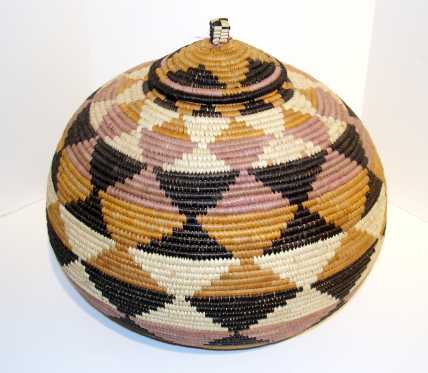
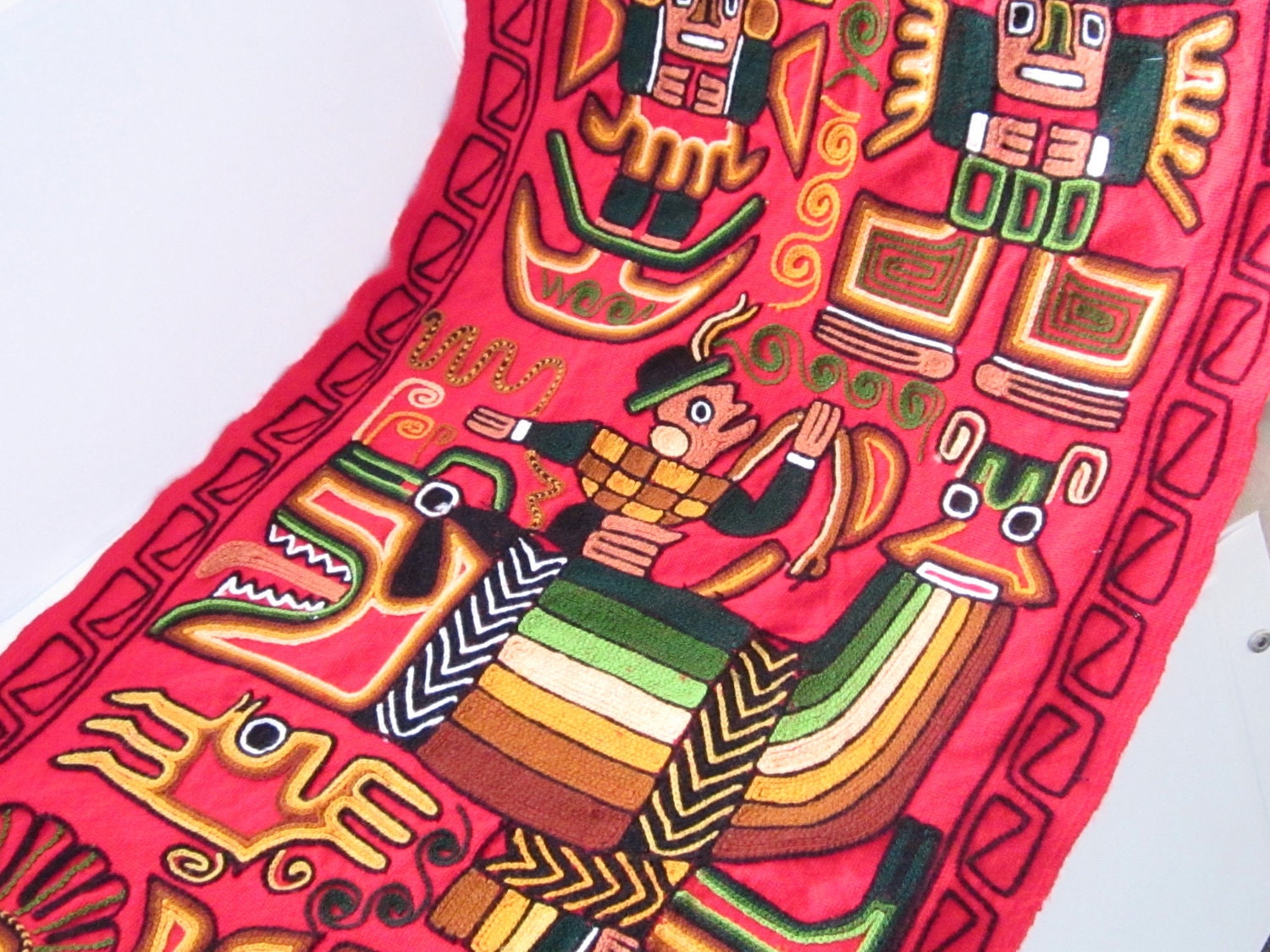
Multicultural mathematics offer rich opportunities
for studying geometry. Research the art
forms of Native Americans and various ethnic groups such as Mexican or African
Americans. What kinds of symmetry or
geometric designs are used in their rugs, baskets, pottery, or jewelry?
Discuss ways you might use your discoveries to
create multicultural learning experiences.
Em, I am interested how you see geometry. Dis you learn geometry in your home land or in the States?
| Native American |
 |
| African American |
 |
| Native American |
| African American |
 |
| Mexican American |
 |
| Mexican American |


I love your opening statement. However, how does one go about figuring out if ones face is symmetric or not. I find this to be soooo ridiculous!
ReplyDeleteWhat do you think Em? Did you have the right tools?
Nope I did not have the proper tools. Having a protractor and a compass would have defiantly came in handy. As you put it, it is very importance that you have the proper tools in order to do the job efficiently. Can you imagine a builder being given a toothbrush to build a house? You would have a very clean foundation.
Pentomino activities:
Em, how many did you find? Was this hard for you?
I was able to re-create all but the 8x10. I found this activity to be very frustrating. I even enlisted the help of my kids to no avail. I will say that I felt quite accomplished each time I created a puzzle. I would love to see how young students go about tacking this activity.
Pentomino Narrow Passage
This took me a while to figure out. I kept coming up 22 in length. I hope I did it right. Did you have a hard time as well? Do you think this would be an activity you would use in your classroom?
As I stated in my post this module took me f-o-r-e-v-e-r to complete. To be honest, I am not that confident yet to replicate this particular activity as I am still not sure if I understood the instruction or if I did it correctly.
Which polygons has the greatest area.
Doing the calculations I found that the areas of the parallelogram, trapezoid, and rectangle were different from that of the triangle and the square. I am now questioning my thinking.
Em, I am interested how you see geometry. Dis you learn geometry in your home land or in the States?
I learned the little that I know about geometry in the U.S. back home I was not taught or think to look at geometry in my surroundings.
Never mind to my response to the "Which polygons has the greatest area." After seeing the solution in module 11 it now makes sense....:}
ReplyDelete